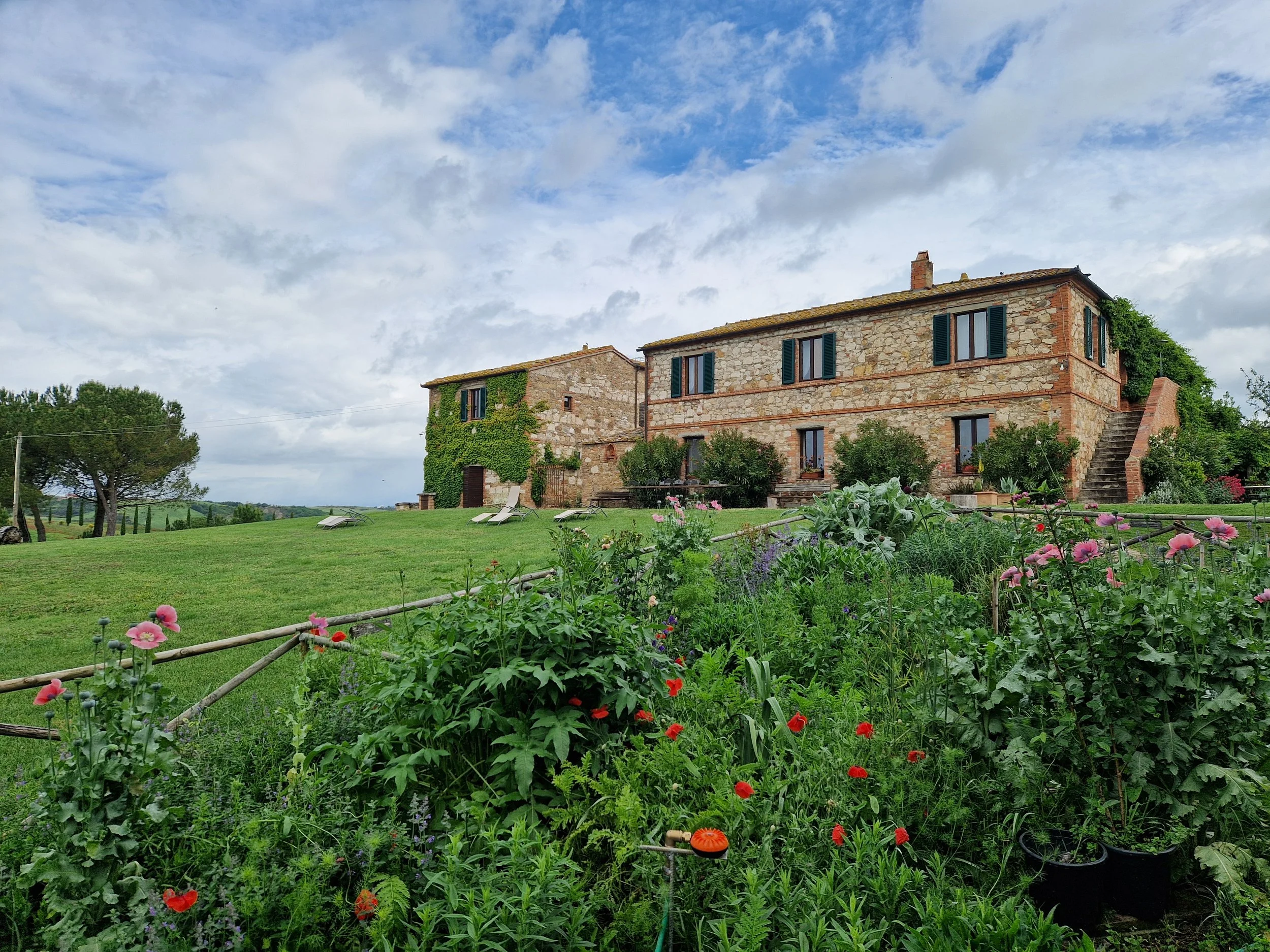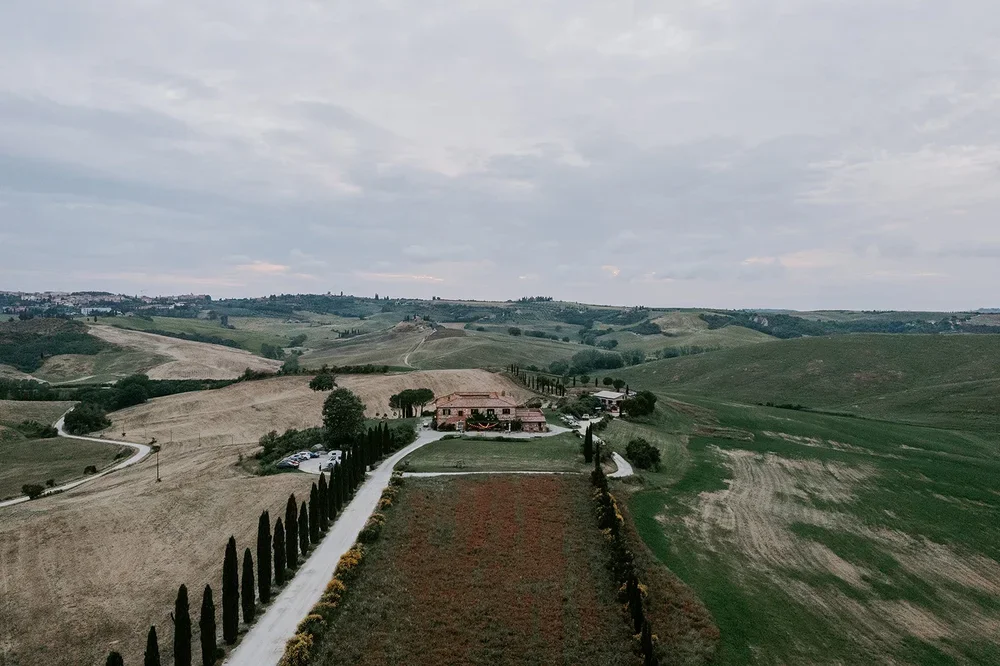
I had a farm in Tuscany

As often happens, I find myself reflecting on the intricate relationship between my land, the travelers who visit it, and the people who live here. It’s a fascinating dynamic, and a delicate balance.
How is it that the perception of a place—like the Val d'Orcia—can be so different between those who live it daily and those who pass through, often deeply touched by its outward beauty?
How can this beauty inspire a sense of transformation, even of revelation, in those who only skim the surface—who don’t engage with the deeper layers of history, tradition, difficulty, and contradiction that shape this place?
Assuming, of course, that those living and working here—whether by necessity, opportunity, or chance—do engage with these layers. I know there are exceptions, on both sides.
In any case, how is it that, out of this partial view—allow me to call it that—such a deep sense of inspiration and introspection can emerge?
Sometimes, it feels as though this happens at the expense of the place itself—flooded with people, cars, and restaurants where once there were services for locals—and at the expense of those who belong to it, often stripped of their complexity and reduced to a caricature of themselves.
I say this, and at the same time I am not immune to the same mechanism.
I was watching Out of Africa the other day. I felt deeply moved by the landscapes, the music, the atmosphere. And then a thought struck me: am I not, in a way, like the Kikuyu in the film?
The story is told through the perspective of a wealthy Danish woman, played by Meryl Streep, who spends only a few years on her African farm. And yet, the narrative—and our emotional access to that place—passes almost entirely through her experience. The local inhabitants seem to merge with the landscape itself.
Of course, the book is a masterpiece, and the film a beautiful work. But it raises a question for me: how can we build a deeper relationship with the places we visit? How can we shift the focus away from ourselves—from what a place makes us feel—towards a more attentive connection with the place itself?
It’s a complicated question, and I see its difficulty reflected all around me.
In the end, embracing what is unfamiliar—or questioning our own way of living—is hard. It’s easier to admire the view than to confront what lies beneath it, especially when we travel too fast.
So I wonder: when we travel, are we really moving outside of ourselves? Or are we simply finding new mirrors, through which we return home feeling confirmed in the life we already know?
If you felt inspired, come back.
Stay a little longer. Come back again.
Let that small seed of inspiration develop—slowly—into something that, over time, might begin to resemble understanding.
Luisa
did you like this post?
Here you can find more “Thoughts from the Hills”—stories, reflections, and a glimpse of perspective from a Tuscan woman who once dreamed of going far away, and then found she couldn’t leave home.